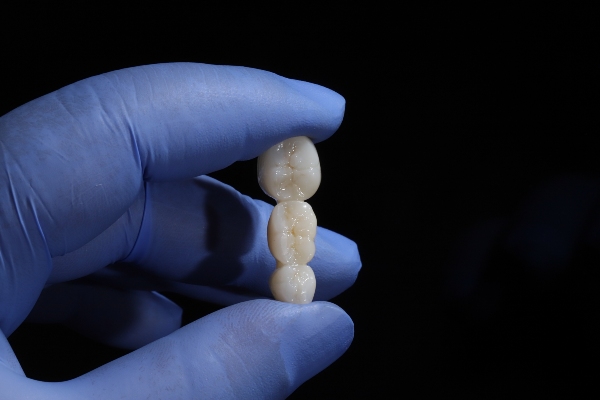
 A dental bridge is a tooth replacement option that does not require incisions to be made into the gums. However, there are many different types of dental bridges, and finding the perfect one can feel overwhelming. While your dentist will usually recommend what they think is best, it can be helpful to know the available types ahead of time. This way, you can make an informed decision about your oral healthcare or prepare questions to ask your dentist.
The many types of dental bridges
Dental bridges come in many forms, but what unites them is that they leverage the teeth around the gap made by a missing tooth in order to suspend a replacement in that space. The main types of dental bridges that patients can choose from are as follows.
Traditional bridges
The most common type of bridge, a traditional bridge, uses one tooth on each side of a gap to support a prosthetic tooth in between. The two natural teeth are shaped to the extent that they can each be covered by a crown, onto which the prosthetic is attached. Due to the need for two crowns supporting the false tooth between them, a traditional bridge only works when the person is missing one tooth between two healthy teeth.
Cantilever bridges
Unlike traditional bridges, which affix crowns to teeth on either side of a gap, cantilever bridges only require one supporting tooth. This makes them more common for treating missing teeth at the end of a dental arch, where only one tooth remains to support the bridge. The rest of the process is the same, with an abutment being placed as a crown on one tooth to support the prosthetic.
Maryland bridges
One of the challenges that dentists face is the front teeth not being as conducive to crowning as the back teeth. So, if a person needs a bridge on the front teeth, a Maryland bridge could be an alternative. This type of bridge uses “wings” bonded to the backs of two nearby teeth to hold a prosthetic in place.
The supports attached to the backs of the teeth are not visible when a person smiles. Maryland bridges cannot withstand strong bite forces (such as those experienced by the molars), so they are typically only used for front teeth.
Removable bridges
Some patients may be good candidates for removable bridges, also called partial dentures. These installations are created using a mold of the patient’s mouth and can be snapped in or out like a retainer whenever the patient wishes. However, their removable nature makes them less sturdy than other types of bridges.
Explore your options for dental bridges
A dental bridge is an accessible way to replace a missing tooth, and with so many options available, patients of all types can find a solution that suits their needs. Contact our dentist to discuss which kind of bridge might be a good fit for your oral situation and to ask any questions about the process.
Request an appointment or call Blue Diamond Dental | Ghazal Hosseini DDS at 925-326-9889 for an appointment in our Concord office.
Related Posts
Losing a tooth can affect more than just your smile; it can also impact how you eat, speak, and maintain oral health. Dental bridges are a popular and effective solution for filling gaps left by missing teeth. By understanding the different types of dental bridges, you can work with a general dentist to find the…
A dental bridge is a reliable solution for replacing multiple missing teeth, restoring function and aesthetics, and preventing further oral health complications. Implant-supported dental bridges combine the stability of dental implants with the efficiency of traditional bridges, offering a long-lasting option for tooth replacement. Understanding the process behind implant-supported dental bridges can help patients feel…
Losing a tooth can affect more than the look of a smile — it can impact speaking, eating, and overall confidence. Fortunately, dental bridges can effectively replace what is missing in function and appearance. By learning the answers to frequently asked questions, patients can see why dental bridges remain a trusted option in modern dentistry.A…