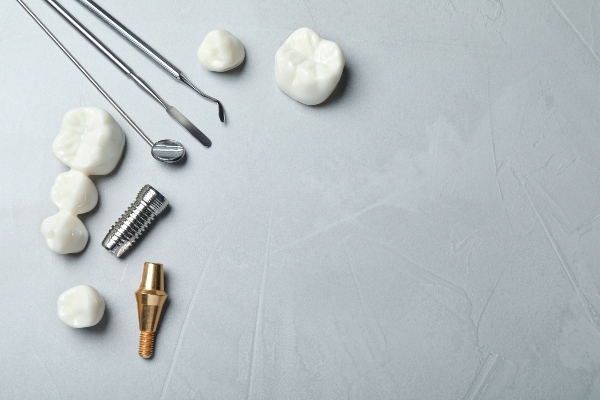
 Losing a tooth can affect more than just your smile; it can also impact how you eat, speak, and maintain oral health. Dental bridges are a popular and effective solution for filling gaps left by missing teeth. By understanding the different types of dental bridges, you can work with a general dentist to find the best fit for your specific needs.
Traditional dental bridges
Traditional dental bridges are one of the most common tooth replacement options. This type of bridge includes artificial teeth, known as pontics, that fill the gap and can replace up to four consecutively missing teeth. Dental crowns, which are natural-looking caps fitted over the adjacent natural teeth, will hold the pontics in their position. Often, the dentist must reshape the adjacent teeth, or abutment teeth, to better accommodate the crowns.
Traditional dental bridges are durable and reliable, especially for patients with strong and healthy teeth adjacent to the gap. They are designed to handle the pressures of chewing and speaking and offer functional and natural-looking replacements.
Cantilever dental bridges
A cantilever dental bridge is slightly different from the traditional design because only one tooth is required to support it. This makes it a practical option when only a single healthy tooth is next to the gap. Dentists typically recommend them for missing front teeth or areas in the mouth that do not endure heavy chewing force. While effective, they require careful placement to ensure the pressure on the supporting tooth does not lead to complications. This option offers a minimally invasive solution for specific cases where the patient may not qualify for a traditional dental bridge.
Maryland dental bridges
Maryland dental bridges, or resin-bonded bridges, are a more conservative option for replacing missing teeth. Instead of crowns, they use metal or porcelain wings that bond to the back of the adjacent teeth. This means less alteration of the surrounding teeth is necessary, which helps preserve their natural structure.
Like cantilever bridges, Maryland dental bridges work well for replacing front teeth, where the chewing forces are lower. However, because the bond is not as strong as traditional crowns, Maryland bridges may not be ideal for molars or other teeth that experience significant pressure. Despite this, they provide an aesthetically pleasing and minimally invasive option for restoring patients' smiles.
Implant-supported dental bridges
Implant-supported dental bridges are favorites among dentists due to their durability and their ability to stimulate the jawbone and gum tissue. Instead of relying on natural teeth, this bridge is anchored by a dental implant that serves as artificial tooth roots. This is the most invasive option for all dental bridges because it requires multiple surgeries. However, they do not require surrounding teeth to be reshaped, preserving more of the patient's natural smile. While the process involves multiple steps, including the surgical placement of implants, the results are well worth the effort for many patients seeking a durable and natural-looking solution.
Bridge the gap in your smile
Deciding on the right type of dental bridge depends on several factors, such as the location of the missing tooth, the health of the surrounding teeth, and your overall oral health. If you are ready to bridge the gap in your smile, contact Blue Diamond Dental | Ghazal Hosseini DDS and schedule a consultation. Our team can determine the most appropriate bridge for your needs.
Request an appointment or call Blue Diamond Dental | Ghazal Hosseini DDS at 925-326-9889 for an appointment in our Concord office.
Related Posts
A dental bridge is a reliable solution for replacing multiple missing teeth, restoring function and aesthetics, and preventing further oral health complications. Implant-supported dental bridges combine the stability of dental implants with the efficiency of traditional bridges, offering a long-lasting option for tooth replacement. Understanding the process behind implant-supported dental bridges can help patients feel…
Losing a tooth can affect more than the look of a smile — it can impact speaking, eating, and overall confidence. Fortunately, dental bridges can effectively replace what is missing in function and appearance. By learning the answers to frequently asked questions, patients can see why dental bridges remain a trusted option in modern dentistry.A…
Are you considering a dental bridge to replace a missing tooth? Read on to learn more. The space left by a missing tooth may make eating and talking difficult. If you have lost your teeth, your goal might be to find a good-looking and functional tooth replacement solution. In that case, a dental bridge is…